
Dog park 🐕 #austin #texas #atx #dogs #dogpark #river #ladybirdlake #skyscraper #boat #downtown #kayak #shotoniphone via Instagram http://bit.ly/2GzhDCg
I find it annoying when someone says “This BBQ isn’t very good” just because it’s not Franlkin’s. Hey, Rudy’s is still good BBQ, and I was so happy to find it when I moved back to Texas! Yum!
Or “This beach isn’t nearly as nice as Hawaii.” Hey, Galveston is still a beach! Sand, waves, wind. Heaven.
Just because there might exist some other version somewhere that is (arguably) better doesn’t mean this one isn’t good/fun/yummy. You’re only hurting yourself, people! So I like this Teddy Roosevelt quote.
Comparison is the thief of joy
Teddy Roosevelt via Soup Peddler
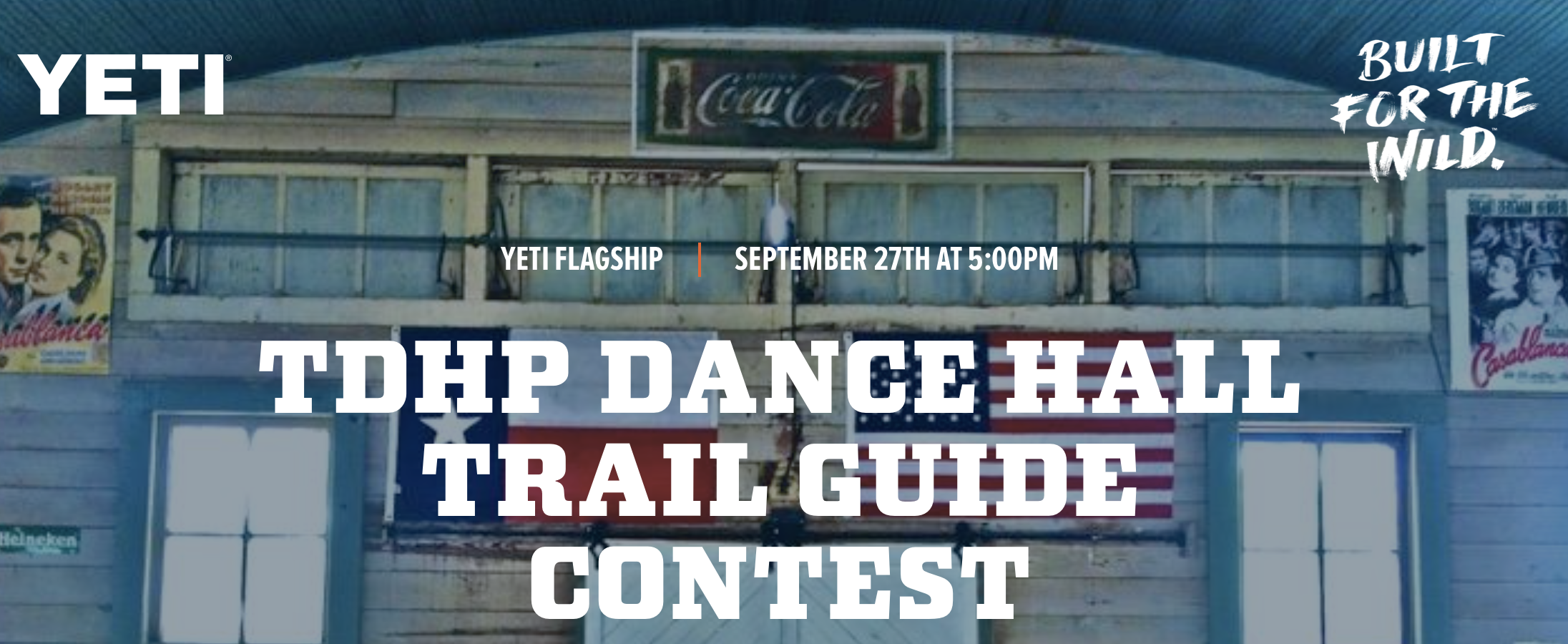
Visit as many Texas dance halls as you can to win free YETI stuff. That sounds like a win-win to me. 😊🤷🏻♂️
👉 Texas Dance Hall Preservation Trail Guide Contest
⇢ Actually, I think this was from 2018. But maybe they’ll do it again this year? And the list of dance halls alone is worth the visit.
Comedy does not come naturally to me, especially if I’m trying to be funny. I like this article’s step-by-step approach to being funnier. And I really like the guy who checks into hotels with a fake Elvis driver’s license. 😂
Humor is about “benign violation” — disrupting your sense of normalcy in a way that doesn’t present any real harm. So weird incongruities. Or remembering a threatening situation that turned out to be fine, and now you feel silly about it.
So here’s a game plan, and like anything else hard and worthwhile, it’s going to take some conscious effort. Luckily, it’s pretty simple…
“Look at the absurdity around you. Check for incongruities,”
Make this a conscious habit in every day life.
Listen, read, watch funny stuff. TV shows, movies, podcasts, etc.
Find someone willing to check your humor. Tell them a joke every day. Get honest feedback. Maybe try an improv class.
Keep in mind that humor is vert contextual. “Know how to apply the basic principles of humor to specific situations.” And humor builds on itself over time. So once you get going with someone, you have a foundation for getting funnier.
👉 https://blog.liberationist.org/the-bright-and-dark-sides-of-optimism-and-pessimism-95c6092f560c
I’d consider myself to be an optimist, even against overwhelming evidence at times. It’s a sort of faith. It’s fun to be optimistic and see what happens. I like to give the middle finger to negativity.
While this article acknowledges the positive powers of optimism, it also details the surprising advantages of some healthy pessimism. I may need to work on leveraging some pessimism more, especially while estimating projects and budgets!
Pessimism can help us prepare and do our best work, increase desire and enthusiasm to improve things, and even reduce anxiety by motivating focus over avoidance. 🤯
Highlights…
Multiple research has shown that optimism has a dark side too. Not only it can lead to poor outcomes, but it makes us underestimate risks or take less action.
Optimists pay less attention to detail and fail to seek new information to challenge their rosy views leading to poor decisions.
The Optimism Bias is one of the two key factors why we inaccurately calculate big projects — we tend to underestimate both time and cost.
Defensive Pessimist is a particular type of pessimist that takes negative thinking to a whole new level. It’s a strategy that helps people reduce their anxiety — it drives focus rather than avoidance.
The defensive pessimist focuses on the worst-case scenario — s/he identifies and takes care of things that optimists miss. This approach can help us better prepare for events that are out of our full control such as a job interview.
In philosophy, Meliorism is a concept which drives our ability to improve the world through alteration — we can produce outcomes that are considered better than the original phenomenon.
Meliorism doesn’t mean ignoring the world’s evils. But to accept life’s setbacks as challenges to overcome. This joie de vivre energizes us — it boosts our desire and enthusiasm

