Software Dev

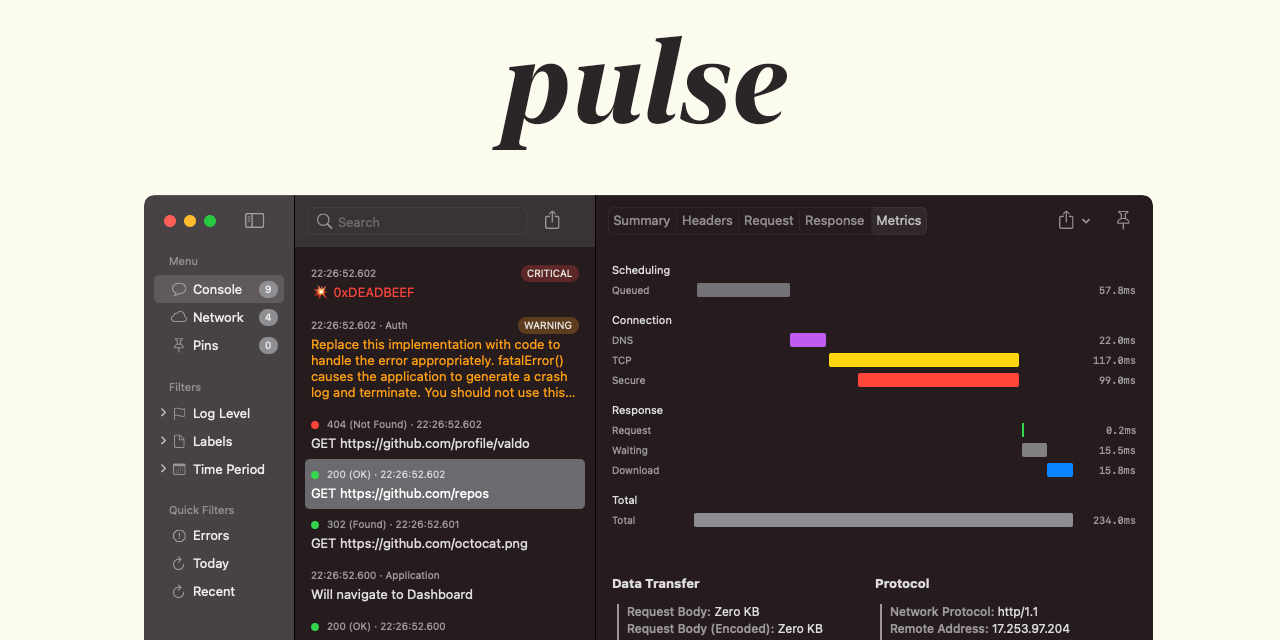
Pulse: Network Inspector

If you want to debug your network traffic on iOS, Pulse looks like a great alternative to WiresharkProxyman, and Charles Proxy.

Pulse takes a different approach, embedding into your app rather than sniffing the network, which can be pretty invasive. (Proxyman “basically performs a MITM attack to see your encrypted traffic.” πŸ€”)

πŸ‘‰ Pulse: Network Inspector

What I wished iOS had is a simple analog of Safari Web Inspector. So I built just that.

Via iOS Dev Weekly.
Pulse Logo
Software Dev

Getting Started with Instruments

Has there ever been a more powerful, but under-utilised tool than Instruments?

Instruments is a tool included with Xcode that helps you analyze, profile, and debug your live iOS app. Solve memory leaks. Visualize memory. Monitor disk, network, memory, and battery usage. You can even find zombies. πŸ§Ÿβ€β™‚οΈ

It lets you do incredible things but is also overwhelming to new developers, in which case this Ray Wenderlich tutorial can come in pretty handy.

πŸ‘‰ Getting Started with Instruments

There’s also an Apple WWDC presentation with this same name. πŸ˜†

Visual Memory Debugger

Via iOS Dev Weekly.

Software Dev

Motion πŸ’“

This ο£Ώ-centric open-source animation library looks promising.

πŸ‘‰ Motion on GitHub

Motion

Motion is an animation engine for gesturally-driven user interfaces, animations, and interactions on iOS, macOS, and tvOS.

I’ve been a little skeptical of open-source animation platforms since I had to toss out one app and then another as cocos2d morphed into cocosd2x and broke everything. Damn that x! But still, this looks cool. πŸ‘†

Via iOS Dev Weekly.

Software Dev

The Elm Architecture

I’ve been trying to understand the Elm Architecture for a new iOS project. I kept reading over this article and thinking, “Wait a minute…. What’s the catch here? This seems too simple.” 🧐

πŸ‘‰ The Elm Architecture: Simple, yet powerful – An overview by example

I like that this architecture can be explained in a very short post with examples.

The beauty of The Elm Architecture lies in its simplicity.

That article is simple but assumes a web UI and explicit mentions HTML πŸ™„. Here is a funnier and more useful article about Elm for iOS. πŸ˜‚

πŸ‘‰ Elm architecture in iOS: Why you don’t need shit like RxSwift or MVVM

Elm architecture can be described as follows

msg -> Model -> View -> msg

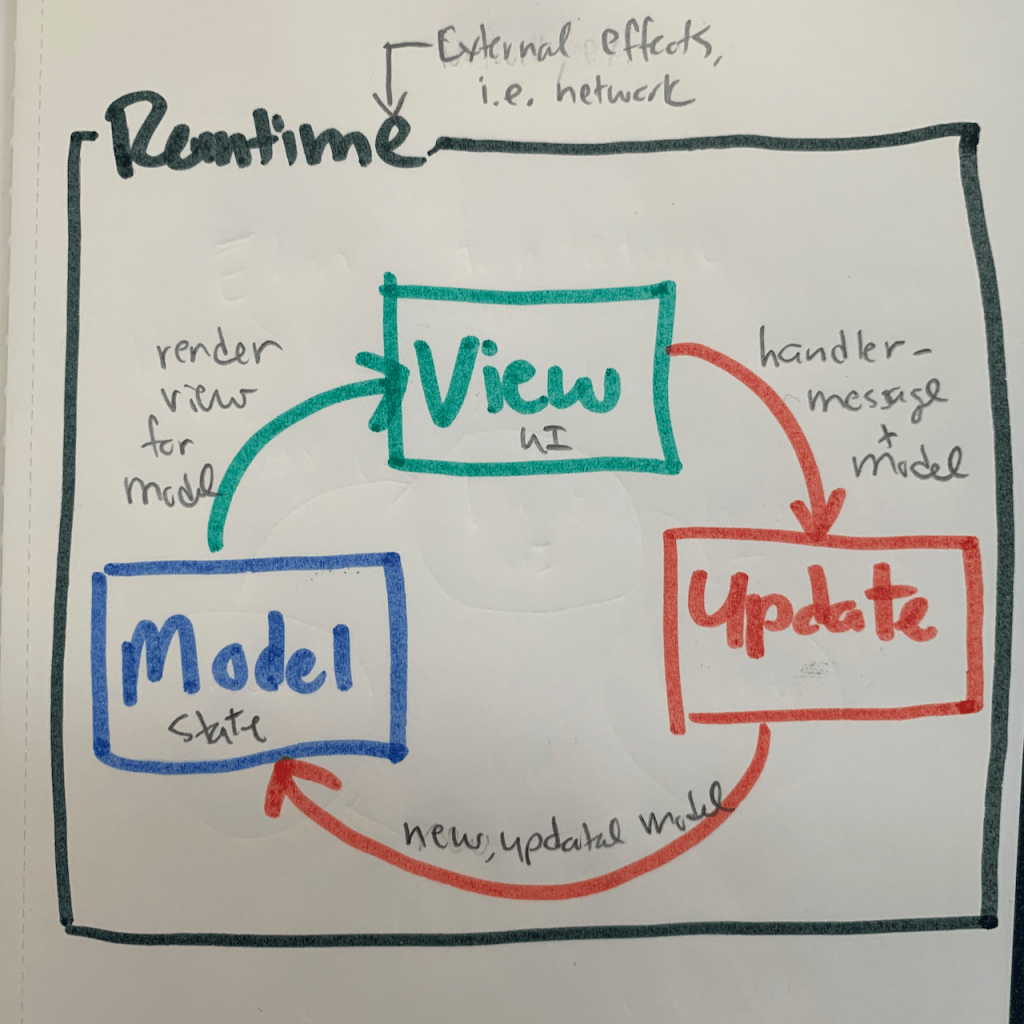
I even made my own diagram just to make sure I “got” it. The devil is in the details, but I think this is right. πŸ€·πŸ»β€β™‚οΈ It definitely seems simpler than VIPER.