Quotes

“Your task is not to foresee the future, but to enable it.”

I love the proactive attitude behind this quote from the author of The Little Prince.

Your task is not to foresee the future, but to enable it.

Antoine de Saint-ExupΓ©ry

Life imitates art. The Little Prince is narrated by a pilot who crash-lands his airplane. And sadly enough, the author himself crashed – and died – while flying an airplane in France a year after the novel’s publication.

But the author did enable his future, even under Nazi-occupied France. It just took some patienceThe Little Prince was published in his home country only after liberation from the Nazis.

Books · creativity

The “So what?” test

Continuing to pull some helpful snippets out of Show Your Work, let’s look at the “So What?” test.

I had struggled for a while on this blog with the “to post or not to post” question. I was honing in on a vague “useful or interesting” test when I read Show Your Work, which attacked this idea with a “So What?” test.

I had a professor in college who returned our graded essays, walked up to the chalkboard, and wrote in huge letters: β€œSO WHAT?” She threw the piece of chalk down and said, β€œAsk yourself that every time you turn in a piece of writing.

Now any of my own posts must pass the “Sow what?” test before I will publish it. Clearly I found this “So what?” test useful because I use it here constantly.

As always, the book explains the idea most vividly with an illustration.

I will say that this rule seems at odds (or is it just tension?) with other ideas in the book, namely share something small every day.

I mean, do you really have something interesting and useful to share every day? If you’re a professional writer, maybe. But if you’re just a guy with a blog and limited time, maybe not. πŸ˜†

So I’m letting the “So what?” rule overrule any others for now.
creativity · Quotes

A good blog is like this item of clothing πŸ‘—

The best quotes are both funny and true, and therefore memorable. At the end of this talk good on conversations, Celeste Headlee credits her sister with this quote.

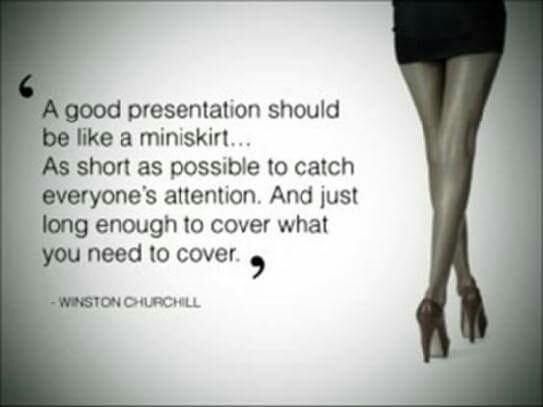
A good conversation is like a miniskirt; short enough to retain interest, but long enough to cover the subject.

The sister might have borrowed the idea from Winston Churchill. πŸ€·πŸ»β€β™‚οΈ

I think the idea generalizes to writing too, so I’m going to adapt the spirit of this quote for my own purposes.

A good conversation blog is like a miniskirt; short enough to retain interest, but long enough to cover the subject.

And it’s working. I already deleted three sentences from this post – and added this one. πŸ€”

Before I forget, here’s a salacious photo – as required – to catch your attention.

Via Pinterest (I don’t think miniskirts even existed in Winston Churchill’s time πŸ˜†)

See also

Don’t Be Like Uncle Colm

β€œI didn’t have time to write a short letter, so I wrote a long one instead.”

The World

ChatGPT is amazing, yes, but it’s also a bit too human πŸ€·πŸ»β€β™‚️

ChatGPT is software that is designed to chat with you like a really smart person. It can make up a story, convert it to a Shakespearean poem, and then solve a math problem all automatically and all within seconds. 🀯

The Daily covered it nicely on the episode Did Artificial Intelligence Just Get Too Smart?

ChatGPT is pretty incredible, especially for students trying to fake a term paper. But the ChatGPT blog itself calls out some interesting and very human-like limitations. In particular, it’s sort of a bore and a blowhard. πŸ˜†

  • It has a tendency to respond with “plausible-sounding but incorrect or nonsensical answers”
  • It is “often excessively verbose” and “overuses certain phrases”
  • It often fails to “ask clarifying questions when the user provided an ambiguous query”, opting instead to “guess what the user intended”
  • And my favorite, “it will sometimes respond to harmful instructions or exhibit biased behavior.”

So it is overconfident and under-reliable, repetitive, a bit of a motormouth, makes assumptions, is biased, and sometimes lacks moral backbone. Does this sound like anyone you know? πŸ˜†

Still, this software an amazing accomplishment. Kudos to the team for being open about its limitations and good luck making it better (and hopefully not evil πŸ€·πŸ»β€β™‚οΈ).

Quotes

“Every noble work is at first impossible.”

Pretty much any interesting/useful/beautiful human achievement you can think of was at first impossible. Mass-printing books? You’re crazy. Sailing ships across the oceans? No way. Putting a man on the surface of the freaking moon? That one still gets me.

While John F. Kennedy gets my award for the best speech about doing the impossible (and within the decade no less!), the Scotsman Thomas Carlyle had summed this idea up nicely a hundred years before.

Every noble work is at first impossible.

Thomas Carlyle

This quote is so clear and to-the-point: it is perfect from a writing perspective.

But can you picture JFK getting up on stage at Rice University in 1962, saying, “Every noble work is at first impossible… let’s go to the moon.” and then just leaving? πŸ˜† I guess politics requires a little more bombast.

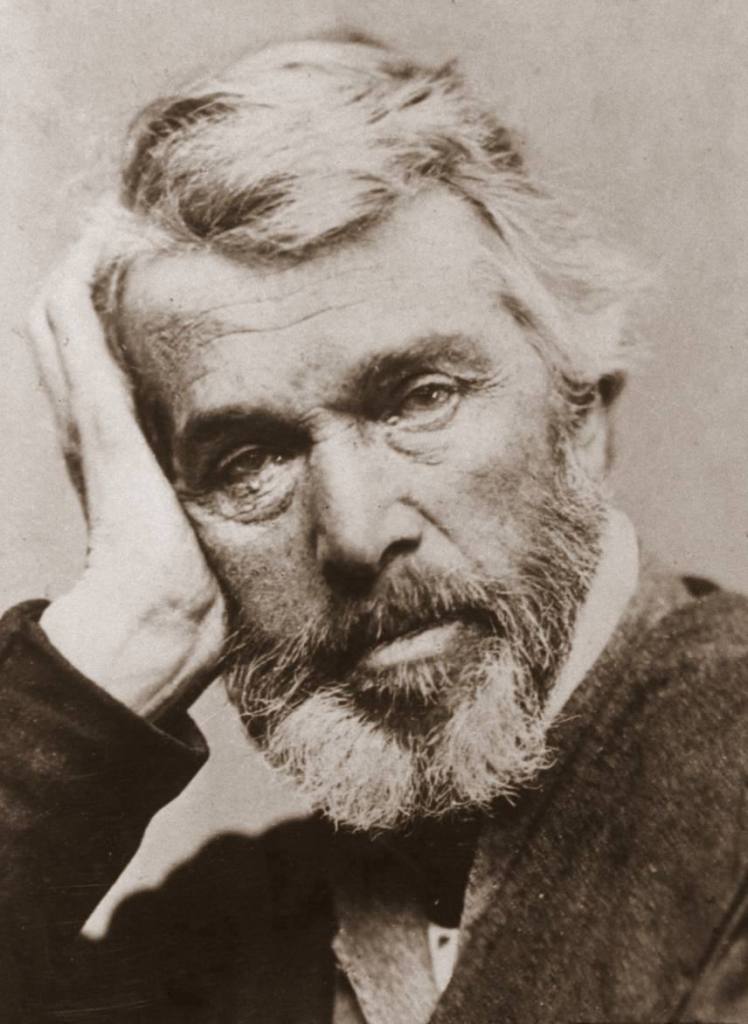
Thomas Carlyle, looking a lot like The Most Interesting Man in the World.